Combating Land Confiscation: Plant een Olijfboom's Mission for Justice
In the heart of the Levant, a silent but relentless battle for land unfolds daily. For Palestinian farmers, their connection to the land is not merely agricultural; it's deeply rooted in culture, history, and identity. This profound bond is increasingly threatened by systematic land confiscation, a process that dispossesses families and reshapes the landscape. Amidst this challenge, a Dutch non-profit organization, Plant Een Olijfboom, stands as a beacon of hope and a powerful force for non-violent resistance. Through the strategic planting of sponsored olive trees, direct aid, and global awareness, Plant Een Olijfboom is actively working towards justice, equality, and a lasting peace.
Their mission extends beyond simply planting trees; it's about protecting livelihoods, preserving heritage, and fostering a future where human rights are upheld for all. By understanding the critical work of Plant Een Olijfboom, individuals worldwide can join a movement that cultivates resilience and stands firm against injustice.
The Enduring Battle Against Land Confiscation in Palestine
The issue of land confiscation in Palestinian territories is complex and multifaceted, stemming from various policies and practices that profoundly impact the lives of farmers and communities. Since 2001 alone, approximately one million Palestinian olive trees have been lost, a stark indicator of the ongoing destruction. This loss is primarily driven by the construction of the separation wall, the expansion of Israeli settlements, the development of connecting highways, and the declaration of buffer zones or closed military areas. Each of these actions diminishes the land available for Palestinian cultivation, severing farmers from their ancestral plots and economic lifelines.
One of the most insidious methods of confiscation involves the revival of an old Ottoman law. This archaic legislation allows authorities to declare land "State Land" if it has not been actively cultivated for three consecutive years. For Palestinian farmers facing severe restrictions on movement, access to water, and permission to build or maintain infrastructure, actively cultivating their land can be an enormous, often impossible, challenge. These restrictions are frequently compounded by security barriers and permit requirements, deliberately hindering agricultural activity. Once declared "State Land," Palestinian families lose all rights to their property, which is then often allocated exclusively for Israeli use, predominantly by settlers or the military. This mechanism transforms what should be a peaceful, productive landscape into a continuous front in the struggle for basic human rights and self-determination. The consequences are severe, pushing many farming families into poverty and undermining the fabric of their communities.
The Olive Tree: A Symbol of Resilience and a Shield Against Dispossession
For Palestinians, the olive tree is far more than just a plant; it is a living symbol deeply woven into their biological, cultural, and religious fabric. Across Palestine, an estimated seven million olive trees stand, many averaging two to three hundred years old, with the oldest known tree in Al-Walaja dating back an astonishing 4,500 years. These ancient sentinels bear witness to generations of history, making their destruction an attack not just on agriculture, but on heritage itself.
Historically, the olive tree has represented peace, hope, wisdom, and prosperity. Its oil and fruit are central to Palestinian cuisine and economy, providing a vital source of income for countless families. The annual olive harvest is a communal event, bringing families and villages together, strengthening social bonds and cultural identity. When an olive tree is uprooted, it’s not just an economic loss; it's a deeply painful symbolic act that seeks to disconnect Palestinians from their land and their past. This profound connection is precisely why the work of Plant Een Olijfboom resonates so deeply. By planting new trees, they are not only restoring agricultural capacity but also reaffirming a commitment to peace and hope in the face of ongoing challenges. The resilient nature of the olive tree itself mirrors the enduring spirit of the Palestinian people. Learn more about its profound significance in our article: The Palestinian Olive Tree: A Symbol of Peace, Hope, and Resistance.
Plant Een Olijfboom's Strategy: Cultivating Justice, One Tree at a Time
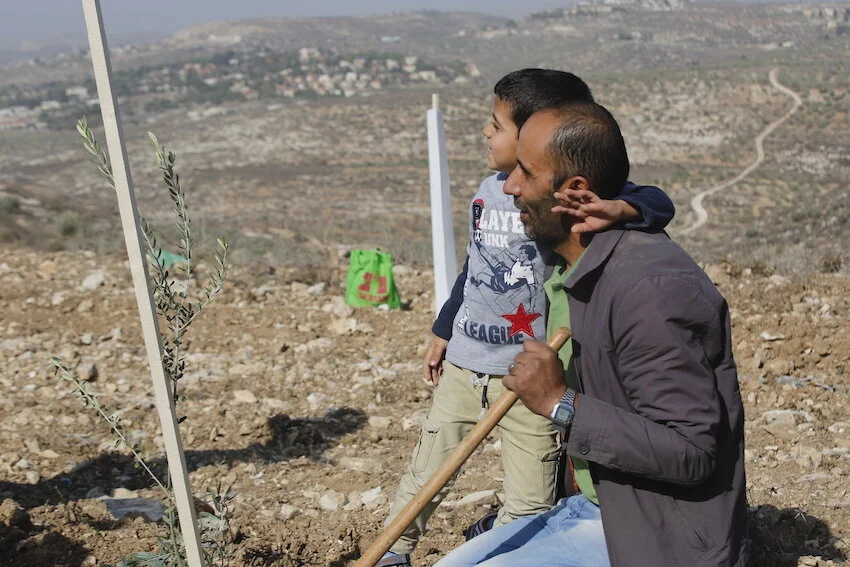
The core of Plant Een Olijfboom's mission is to facilitate meaningful, non-violent action against land confiscation. Their primary strategy involves supporting Palestinian farmers by sponsoring the planting of olive trees on private land at risk of confiscation by Israeli authorities. This isn't merely a symbolic gesture; it's a highly effective and strategic defense. By actively cultivating the land and planting new trees, farmers can demonstrate continuous use, directly challenging the application of the Ottoman law that declares 'unused' land as state property. This act of planting makes the farmers' claim to the land visible and undeniable, preventing confiscations from taking place in silence and bringing international attention to the issue.
Beyond tree planting, Plant Een Olijfboom provides multifaceted support through its Palestina Fonds, offering crucial aid where needed. They also play a vital role in raising awareness, primarily in the Netherlands, about the realities faced by Palestinians. This educational outreach extends to promoting solidarity travel, encouraging individuals to witness the situation firsthand and connect directly with the farmers they support. The organization's overarching mission is rooted in a vision for a just peace, ensuring equality for all citizens, including the fundamental right of return for Palestinian refugees. Driven by a diverse group of volunteers and guided by principles of human rights, justice, and equality, Plant Een Olijfboom collaborates closely with local Palestinian organizations and journalists, ensuring their efforts are impactful and aligned with the needs of the communities they serve. Discover more about the practical impact of their work: How Planting Olive Trees Protects Palestinian Land & Livelihoods.
Beyond the Groves: A Global Call for Solidarity and Action with Plant Een Olijfboom
The dedication of Plant Een Olijfboom is powered by a diverse group of individuals united by a shared belief that action must be taken against the decades-long injustice faced by Palestinians. Their volunteers, board members, and coordinators are unwavering in their commitment to human rights, justice, and equality. But their mission doesn't just call for observation; it invites participation. Individuals around the world have a powerful role to play in supporting this vital work.
There are several tangible ways to contribute to Plant Een Olijfboom's efforts. Sponsoring an olive tree is perhaps the most direct way to make an impact, offering a tangible act of solidarity that protects land and supports a farming family's livelihood. Donations to the Palestina Fonds provide essential aid beyond tree planting, addressing broader humanitarian needs. Spreading awareness by sharing information about the situation in Palestine and the mission of Plant Een Olijfboom is crucial in challenging misinformation and fostering understanding. For those seeking a deeper connection, participating in solidarity travels organized or promoted by the organization offers a unique opportunity to witness the reality on the ground and meet the resilient communities being supported. By joining this movement, you become part of a collective endeavor to cultivate not just trees, but also hope, justice, and the foundation for a dignified future.
Plant Een Olijfboom stands as a testament to the power of non-violent resistance and global solidarity in the face of immense challenges. Their strategic approach to combating land confiscation through olive tree planting, combined with humanitarian aid and crucial awareness campaigns, offers a blueprint for meaningful action. In a world often grappling with complex conflicts, their mission shines as a clear call for justice, equality, and a just peace. By supporting Plant Een Olijfboom, you are not just planting a tree; you are planting a seed of hope, cultivating resilience, and actively contributing to a more equitable future for Palestinian communities.